Why Marigolds? The Meaning of Cempasúchil in Día de Muertos
Marigolds, called cempasúchil in Mexico, are the flower of Día de Muertos, or Day of the Dead. Their bright orange color and strong, earthy scent are believed to guide the spirits of loved ones back home for their yearly visit. If you have ever wondered why this one flower is everywhere during the celebration, here is the story behind it.
What is the cempasúchil flower?
Cempasúchil is the Mexican marigold, a bright golden orange bloom with layer upon layer of ruffled petals. It is native to Mexico, and its name comes from Nahuatl, the language of the Aztecs, from a word that means roughly twenty flowers, a nod to the many petals crowded into a single head. You will also hear it called flor de muerto, the flower of the dead.
It is the same flower many of us grow in our gardens without a second thought. In Mexico, for a few weeks every fall, it becomes something much bigger.
Why are marigolds used for Día de Muertos?
The belief is beautifully simple. The marigold guides the spirits home. Its color is said to hold the warmth of the sun, and its scent is strong enough to reach the dead and lead them back to the world of the living. Families lay paths of loose petals from the street to the front door, and from the door to the ofrenda, so no soul loses its way.
I think that is why the flower means so much to so many people, whether they grew up with the tradition or found it later in life, the way I did. Anyone who has lost someone knows the ache of wanting to show them the way back, even for one night. The marigold gives that longing somewhere to go.
Where does the marigold tradition come from?
The marigold’s connection to the dead in Mexico goes back centuries, long before the Spanish arrived. The Aztecs grew cempasúchil and used it in ceremonies, in medicine, and in honoring their dead. Over time those Indigenous traditions blended with the Catholic observances of All Saints’ and All Souls’ Days, and the cempasúchil endured through all of it.
Today much of Mexico’s crop is still grown the old way, in fields across states like Puebla and Michoacán and on the chinampas, the floating gardens of Xochimilco in the south of Mexico City. By late October, entire fields there turn orange, ready for the harvest.
How are marigolds used during the celebration?
You will find cempasúchil woven through every part of the holiday. It is heaped on ofrendas, scattered in petal paths, shaped into arches over altars, and laid across graves in candlelit cemeteries. It is often paired with terciopelo, the deep magenta cockscomb, and together the two flowers set the colors of the whole season.
The scale of it can take your breath away. At the Mercado de Jamaica, Mexico City’s great flower market, I saw marigolds literally stacked by the pallet. They were piled in wheelbarrows and on the backs of trucks, potted and unpotted, large and small, with bags of loose petals for sale so families could scatter their own paths at home. I had never seen so much of one flower in my life.
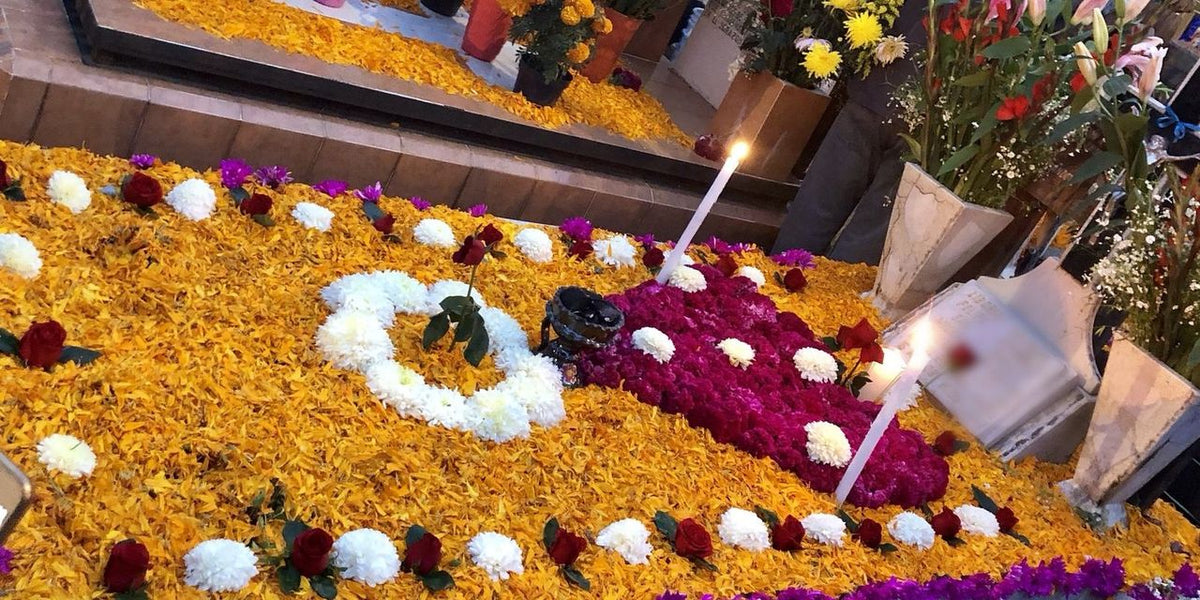
In the cemetery in Mixquic, I watched what all those flowers become. Families had covered the graves of their loved ones in thick blankets of marigold petals, edged with magenta cockscomb and white chrysanthemums, with candles burning as the light faded. On my second Día de Muertos trip to Mexico City, the Mega Ofrenda in the Zócalo was surrounded by thousands of potted marigolds blanketing the square, which I wrote about in what Día de Muertos in Mexico City is really like. At home in Colorado, marigolds are always the first thing I search for when I build an ofrenda for my dad. They are not always easy to find here in November, and some years I have used artificial ones as at least a symbolic gesture, but
finding the real thing always makes me happy. If you want to make one of your own, here is
how to build an ofrenda from the very beginning
Can you use marigolds if you are new to the tradition?
Yes, and you do not need a Mexican market to begin. Fresh marigolds are easy to find at many garden centers and grocery stores in the fall, and paper marigolds work beautifully and last from year to year. A small bunch beside a photo and a candle is enough. What matters is the intention behind it, the act of remembering someone and lighting the way.
If you want to keep that reminder with you all year, the Marigold Path bracelet from the Courage Collection was named for exactly this, the path of petals that leads the people we love back home.
Why does the marigold mean so much to me?
The marigold is not just a symbol I admire. It is half of my brand’s name, it runs all the way through Monarch of the Heart , and it is tattooed on my own skin, alongside the monarch and the heart. The first time you stand surrounded by cempasúchil, breathing in that sharp, unmistakable scent, you understand it in your body. This is the flower that calls the ones we love back home. I have needed that flower more than once.
With much love for the journey,
Carrie